
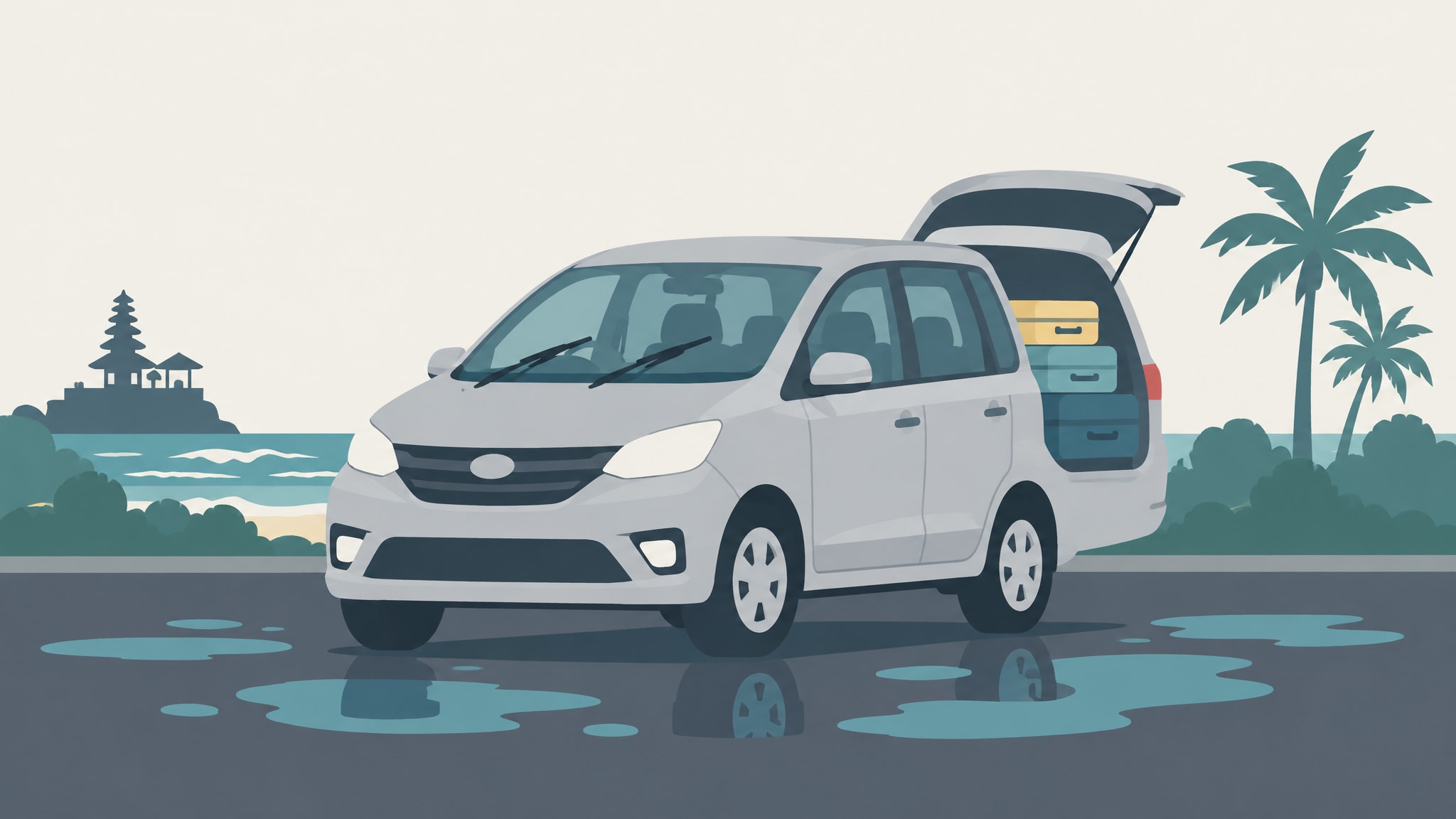
If you are deciding between a car and a scooter for Bali, you have probably read plenty of advice from scooter blogs. We are a car rental company, so we have a view of our own. We also owe you a straight answer, including the cases where a scooter is the better pick.
We are locally owned and based in Canggu. When we describe wet-season roads and busy junctions, we are describing the roads our own customers drive every day.
Renting a Car or a Scooter in Bali: The Short Answer
A car is the safer default for families, heavy luggage and wet-season travel. An experienced rider on a short, dry-season trip can reasonably choose a scooter, and we will not pretend otherwise.
| Your situation | Better fit | Why |
|---|---|---|
| Family with young children | Car | Child seats, shelter, everyone together |
| Suitcases or a stroller | Car | Boot space; a scooter has only a small under-seat box |
| Rainy season travel | Car | Dry luggage, better visibility, no slick-road exposure |
| Long airport or cross-island transfers | Car | Air-conditioning and seats for the whole group |
| Experienced solo rider, short dry trip | Scooter | Easy in traffic, easy to park |
| Couple with light bags, dry weather | Scooter or small car | Depends on rider experience and comfort |
The rest of this article explains each row, so you can decide with your own trip in mind.
Scooter vs Car Safety in Bali: Where the Real Risk Sits
Safety is the question most visitors ask first, and the honest answer has two halves. Vehicles differ a lot in how they protect you in a crash. They differ much less in how often trouble finds you.
Crash Protection: What a Rider Has and What a Driver Has
A car wraps its occupants in a body shell with seatbelts and, on most newer models, airbags. A scooter rider has a helmet and whatever clothing they wear. That gap is the honest core of the safety argument, and it does not disappear on a quiet road.
For a passenger, the gap is even more obvious, because a pillion seat offers no structure around you at all.
A car does not remove risk, though. Speed still decides how bad a crash gets, and a tired or distracted driver is still a hazard in any vehicle.
Traffic and Road Surfaces: Risks That Apply to Both
Bali’s traffic is dense, and it moves in a way that can surprise newcomers. Scooters weave, cars stop without warning, and unfamiliar junctions catch out drivers and riders alike.
Road surfaces add to this. Potholes, loose gravel, uneven edges and sudden drops near drains appear on both main roads and side lanes.
Because of this, rider or driver experience matters as much as the vehicle. If you have never ridden a scooter, Bali is a poor place to learn. If you drive confidently at home, an automatic car is a gentler introduction to local traffic.
Route choice matters too. You can cut risk in either vehicle by avoiding peak hours, skipping unfamiliar narrow lanes after dark and giving yourself extra time.
Rainy Season Transport in Bali: Why Weather Changes the Answer
The coming wet season runs from late 2026 into 2027, so a trip you book now may land right in it. That makes weather a real part of your transport decision, not an afterthought.
Why Rain Hits a Scooter Harder Than a Car
Rain changes three things at once for a rider. Painted road markings and manhole covers turn slick, so braking and cornering margins shrink. Visibility drops, both for you and for drivers who need to see you. Low roads can flood within minutes, and water hides potholes underneath.
A downpour also ends the fun fast. A rider gets soaked, pulls over for shelter, and then still has to ride the rest of the way on wet roads.
A car handles all this more calmly. Your luggage stays dry, the windscreen wipers do their job, and you have a roof over your head when a storm hits. A car is not immune to flooded lanes, but you sit higher and more protected than a rider does.
Planning Wet-Season Days Without Getting Stranded
A few habits make wet-season days smoother.
- Check the forecast the evening before and again in the morning. Afternoon storms are common, so plan longer drives for the morning.
- Turn around at flooded lanes instead of testing the depth. If water covers the road and you cannot see the surface, it is not worth it.
- Leave extra time for every journey, because rain slows traffic across the whole island.
- Keep our 24-hour road assistance details somewhere you can reach them quickly, such as a saved WhatsApp contact.
Our rentals include insurance and 24-hour road assistance, so a breakdown on a wet afternoon becomes a call to our team rather than a long wait by the roadside. You can read more about our 24-hour breakdown help before you travel.
Car Rental for Families vs Scooters: Luggage, Seats, and Comfort
Families feel the difference between these two options more than anyone. Once children, bags and flight fatigue enter the picture, a scooter stops being a serious choice.
Luggage: What Fits and Where It Goes
A scooter has limited under-seat storage, which suits a small daypack and not much else. Anything larger sits between your feet or on your back, which affects balance and comfort.
A car takes suitcases, a stroller and beach gear in the boot, out of sight and out of the rain.
Here is an illustrative scenario, not a customer case. A family with young children lands at the airport with suitcases and a child seat. They have no sensible way to ride a scooter, while a car takes all of it together.
Our fleet runs from small city cars to larger family vehicles and is all automatic, so the real decision is how many people and bags you are traveling with. If you are unsure, tell us your group size and luggage and we will suggest a fit.
Child Seats, Long Transfers, and Shared Comfort
There is no safe place for a child seat on a scooter, and we would not suggest trying. In a car, a child sits properly secured, the air-conditioning keeps everyone comfortable, and a nap on the way to Ubud or Uluwatu is possible.
Groups also stay together. Instead of splitting across two or three scooters and losing each other at junctions, everyone arrives at the same time and the driver can focus on the road. Here are our child seat options for little ones if you are traveling with babies or toddlers.
Traveling with family? Message us on WhatsApp with your dates, group size and luggage, and we will send a no-obligation quote. Last-minute bookings are fine, and we can arrange an airport pickup so the car is waiting when you land.
Cost and Flexibility: Where a Scooter Still Makes Sense
A scooter is the cheaper daily option. It is also easier in heavy traffic and tight parking, and it lets you slip down lanes where a car would struggle. For a solo rider or a couple with light bags on a dry-season trip, those are real advantages.
That said, the day rate alone can mislead you. A fair comparison counts passengers, luggage, insurance, fuel and parking, and what happens if the weather turns. If you would need two scooters for your group, or a taxi on rainy days as well, the gap narrows quickly.
The same check applies to monthly quotes. Ask what is included, what the deposit is, and how damage or theft claims work, because a low headline figure can hide gaps. Compare full quotes, not headline day rates.
For price detail, see our earlier car-versus-scooter comparison.
This article does not suit everyone, and a car is not the right answer for a confident rider who wants a cheap week of beach hopping in dry weather.
The Safest Way to Get Around Bali: Matching Transport to Your Trip
No single option is safest for everyone. The lower-risk choice depends on who is traveling, what they carry and how comfortable they are on Bali’s roads.
- Solo riders and couples: A scooter works if you are experienced and the weather is dry. If you want more shelter, a small city car gives it to you.
- Families and groups: A larger car is the clear choice, because it seats everyone and carries the luggage.
- Anyone who would rather not drive in Bali: A car with a professional driver removes the navigation and traffic stress entirely.
Ride-hailing suits short hops, such as dinner in the next neighbourhood. It becomes awkward for full-day trips, return journeys from remote spots or late-night pickups when you want a guaranteed ride.
Self-Drive or With a Driver: Choosing the Lower-Risk Option
If Bali’s traffic makes you nervous, you do not have to drive at all. A local driver knows the junctions, the shortcuts and the flood-prone roads, and you can look out of the window instead of at the satnav.
Self-drive suits people who drive confidently at home and want the freedom to change plans. Our guide on whether to self-drive or hire a driver goes through the trade-offs in detail.
You can see our chauffeur-driven rental pricing before you decide. A driver does not make the roads any quieter, but it does take the decisions off your shoulders.
Before You Book: Licenses, Insurance, and What to Confirm
Paperwork is not the exciting part of a holiday. It is, though, what protects you when something goes wrong, so it deserves five minutes before you pay.
Licenses and Helmets: The Rules That Apply Either Way
Whether you rent a car or a scooter, you need a valid home license. Depending on the rules in force, you may also need an international permit. Check the current requirements before you travel, because they are set by the authorities and not by us.
Riders and passengers on scooters must wear helmets. Skipping the right license or helmet can mean a fine from the police. It can also mean an insurer disputes your claim after an accident, which is a far costlier problem.
Here is a short checklist to run through with any provider:
- Valid license, plus an international permit if the rules require one
- Helmets for every rider and passenger, if you choose a scooter
- Insurance included in the quote, with the cover clearly explained
- 24-hour road assistance and a number you can save
- Clear terms on deposits, damage and fuel
You can read what our insurance covers before you book. If you are comparing companies, how to vet a rental company walks through the questions worth asking.
Ready to book, or just want to compare? Message us on WhatsApp for a no-obligation quote. We handle last-minute bookings and airport transfers, so you can land, find your car and head to your accommodation without the hassle.
Frequently asked questions
Does it make sense to rent a car in Bali?
Yes, if you travel with children, suitcases or a group, or if you visit in the wet season. A car gives you shelter, space and a safer ride for a whole group. A scooter only wins for experienced solo riders or couples with light bags on short, dry-season trips.
What happens if I drive without a license in Bali?
You risk a fine from the police, and an insurer may dispute any claim after an accident. We do not set the fine amounts, so check the current rules with the authorities before you travel. Carry your valid home license and any international permit the rules require.
How much does a one-month car rental in Bali cost?
The price depends on the car, the dates and what the quote includes, so we quote monthly rentals individually. Message us on WhatsApp with your dates and group size for a no-obligation quote. Compare what is included, such as insurance and road assistance, and not only the headline figure.
Is a scooter always cheaper than a car in Bali?
A scooter is cheaper per day, but the full picture can differ. If you need two scooters for your group, pay for extra insurance, or fall back on taxis in the rain, the gap narrows. Ask for full quotes for both options before you decide.


