
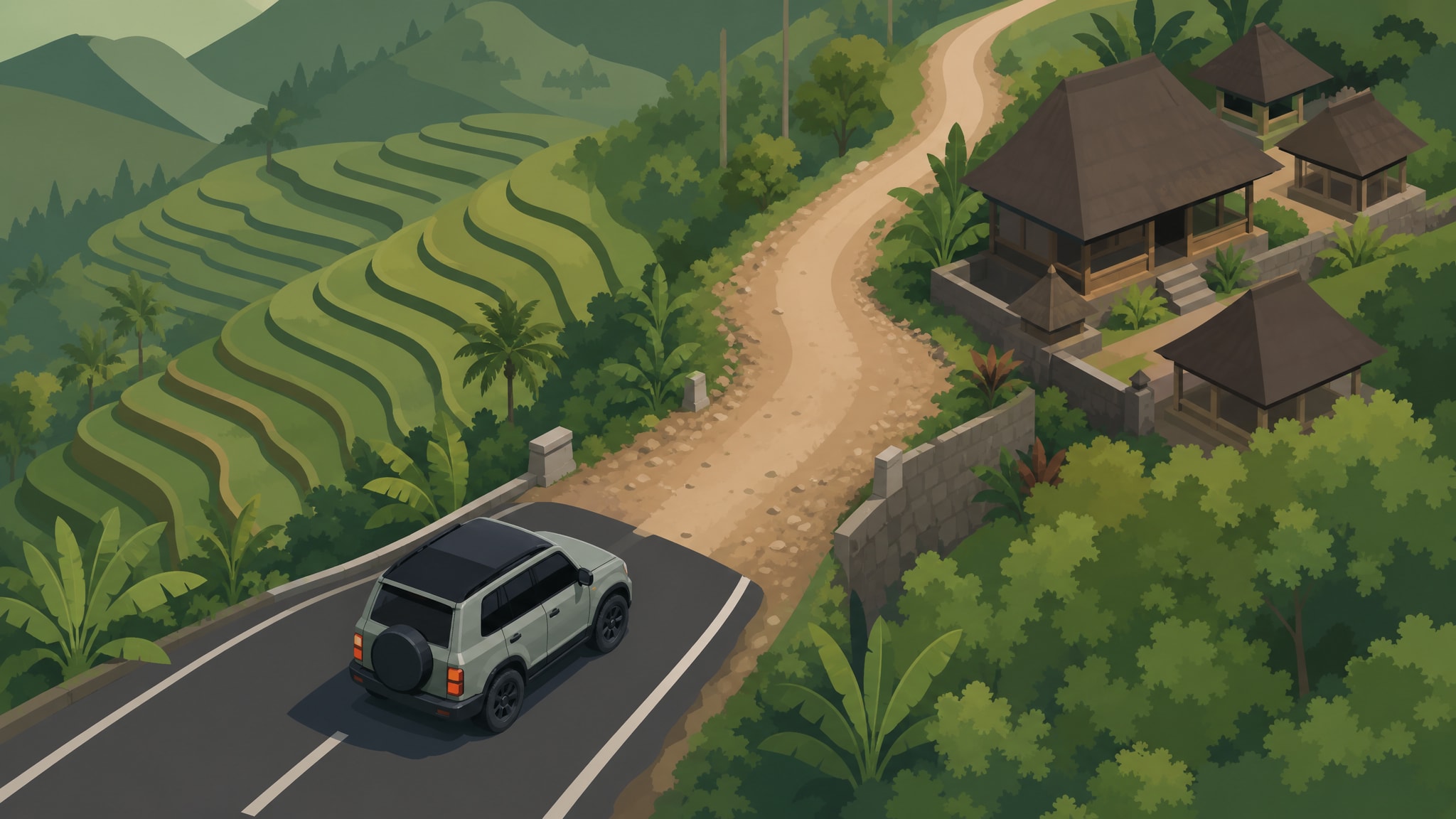
Magic Hills Bali has become one of the island’s most talked-about destinations for 2026, drawing travelers who want to see Bali’s interior beyond the usual tourist corridors. This developing region is rawer and less manicured than the coastal hubs, but getting there takes some practical preparation and the right transport plan. Whether you drive the winding access roads yourself or hire a local driver who knows the terrain, knowing what this area actually offers today will save you from disappointment.
What Is Magic Hills Bali and Why Visit in 2026?
Magic Hills is not yet a fully developed resort zone with paved boulevards and standardized signage. Visitors expecting infrastructure like Seminyak or Nusa Dua will find something different from the promotional photos. New villas and cafes are still going up alongside traditional villages, and road conditions and amenities can shift noticeably from one month to the next through 2026.
Location Overview and Current Development Status
This region sits inland from Bali’s southern coast, between the saturated tourist belt and the more remote central highlands. Development here is active but uneven: some sections have newly graded asphalt, while others are still narrow village tracks that only widen when a construction vehicle forces its way through. Expect a mix of finished roads and transitional surfaces rather than uniform paving across the whole area.
Infrastructure maturity depends heavily on which part of Magic Hills you’re visiting. Some clusters have finished their internal road networks; adjacent zones are reachable only by compacted earth or gravel. Because of this patchwork, navigation apps sometimes show routes that exist on the map but lack the width or surface quality for comfortable driving in a larger vehicle.
Best Times to Visit Based on Weather and Crowds
Dry season gives the most reliable access, since unpaved sections turn muddy and can become impassable after sustained rain. Early morning visits usually mean clearer roads and cooler temperatures, before the afternoon heat builds and before day-trippers show up on the main approach routes.
Weekday visits generally mean fewer vehicles fighting for space at narrow passing points, though construction activity itself tends to peak on weekdays and can create its own bottlenecks at active building sites. Planning around both patterns helps you dodge tourist congestion and work-related delays alike.
Self-Drive Car Rental Tips for Navigating Magic Hills
Compact automatic cars are consistently our top recommendation for emerging destinations with narrow access roads and minimal parking infrastructure. Larger SUVs or vans that handle highway driving just fine often struggle with the tight turning radiuses and thin shoulder space on Magic Hills’ secondary routes.
Choosing the Right Vehicle Size for Narrow Roads
Vehicle size matters more here than in established tourist areas, because misjudging clearance on a single-track road can leave you reversing a long way with no safe pullout in sight. An automatic car rental for tourists takes manual gear changes off your plate on steep inclines, so you can focus on reading the road edges and oncoming traffic instead.
You’ll appreciate the smaller footprint when you meet parked motorcycles, construction materials, or pedestrians walking along roads with no dedicated sidewalk. Ground clearance still matters for the occasional rough patch, but it’s overall dimensions that decide whether you can pass without scraping a wall or dropping a wheel into a drainage ditch.
Parking Availability and Road Conditions Update
Formal parking is still limited within Magic Hills, so most visitors rely on roadside stopping areas or informal lots run by local residents near popular viewpoints and cafes. These spaces fill fast during peak daylight hours, and payment is often cash-in-hand to an attendant rather than the automated ticketing international travelers are used to.
Our hassle-free last-minute booking option is built for travelers who decide to visit spontaneously after they’ve already landed in Bali and realize they need the right vehicle for this specific terrain. We keep compact automatic models available for same-day pickup, because we know these decisions often get made once you see current conditions for yourself, not weeks in advance.
Hiring a Car With Driver for Stress-Free Exploration
Local drivers provide real navigation value in areas where digital maps lag behind rapid development and road changes that can happen monthly, sometimes weekly. When GPS sends you toward a path locals know has been blocked by construction, or washed out since the last satellite update, having someone who reads the actual landscape saves you time and stress.
Benefits of Local Drivers for Remote Areas
Navigating unfamiliar rural roads without consistent signage takes attention that competes directly with actually enjoying the scenery and the cultural details that make Magic Hills worth visiting. A chauffeur handles the spatial judgment calls and route corrections, so you can watch the rice terraces, temple ceremonies, and shifting architecture instead of staring at potholes and judging gap widths.
Our drivers adjust the day’s route based on what’s actually passable right now and where there’s realistic parking near your next stop. That flexibility matters most when weather shifts without warning or a local event scrambles the usual traffic patterns in ways no app predicts.
Typical Daily Rates and Inclusions
When you hire a car with driver for Magic Hills, daily rates typically cover fuel, insurance, and the driver’s time for a standard ten-hour period from pickup. Trips that run longer than that incur additional charges, agreed on before you set off, so there are no surprises if the day stretches out.
Peace of mind comes from knowing your driver stays in contact with our dispatch team throughout the day. That means quick adjustments if road conditions turn or you want to add a stop you spotted en route, a level of backup that independent drivers booked through informal channels usually can’t match.
Route Planning: Getting to Magic Hills from Key Areas
Travel times swing a lot depending on where you start and what time you leave, because Bali’s main roads see congestion waves that don’t scale neatly with distance. Plan your arrival window around these bottlenecks rather than assuming a steady average speed for the whole trip.
Driving Times from Canggu, Seminyak, and Ubud
From Canggu, you’ll typically pass through Pererenan and Mengwi before reaching the inland approaches, and total transit time varies widely depending on whether you leave during the school run or a mid-morning lull. Many Magic Hills visitors start from this area, which makes Canggu car rental pickup a sensible starting point that skips the backtrack to an airport-area rental office.
Seminyak adds a fair bit of urban transit time before you reach open road. Ubud-based travelers face a different set of headaches, mountain passes and shared tourist-bus traffic on the same routes. Each starting point has its own timing quirks worth building into your buffer.
Alternative Routes During Peak Traffic Hours
Leaving before seven in the morning or after four in the afternoon usually dodges the worst of the congestion on the main corridors into Magic Hills, though these windows shift a little as tourism volumes change across 2026. Mid-day departures sometimes hit lighter traffic than you’d expect, since tour groups and transfer services cluster around morning pickups and evening returns rather than the middle of the day.
Secondary roads running parallel to the main routes occasionally offer a faster way through when things stall, but these detours take local knowledge to navigate with confidence, without risking a wrong turn onto a genuinely impassable track. Ask us about current conditions before you leave and we’ll give you routing advice that reflects what’s happening right now, not general guidance that’s gone stale.
Nearby Attractions Worth Combining With Your Trip
Several destinations pair naturally with a Magic Hills visit thanks to geography and road connectivity, so you can build a multi-stop itinerary without much backtracking. Rice terrace viewpoints in the adjacent subak systems offer a different photo than the heavily visited Tegallalang, while sitting on the same general approach roads.
Traditional markets in nearby towns run on morning schedules that line up well with an early Magic Hills departure, giving you a slice of local life before crowds arrive at the more famous tourist markets. Small temples and community spaces scattered through the region welcome respectful visitors and often show architectural detail you won’t find at restored heritage sites built for international crowds.
Coffee plantations and processing facilities in the surrounding highlands make for good stops to break up the driving while you see the agricultural practices behind Bali’s rural economy. These are working farms, not the commercialized agrotourism venues found elsewhere on the island, so what you see is production, not a staged demonstration for a quick photo.
Essential Preparation Checklist for First-Time Visitors
Rural exploration carries some built-in uncertainty. Prepared travelers deal with it through planning ahead rather than scrambling once something goes wrong. Knowing the infrastructure limits before you leave lets you pack right and set expectations about what services will actually be available outside the established tourist zones.
Fuel Stations and Connectivity Gaps
Fuel stations thin out once you leave the major roads, so fill your tank before entering Magic Hills. That way a longer-than-planned return route, because of a detour or extra exploring, won’t leave you anxious about range. Carry enough cash for fuel, since card terminals at smaller outlets fail often and mobile payment isn’t reliably accepted yet outside the tourist centers.
Mobile signal drops unpredictably across the region no matter the carrier, and the gaps tend to appear exactly where the roads get more complicated and a wrong turn matters most. Download offline maps for the whole area before you leave, and it’s worth bringing a paper map too, as backup if your phone and the network both let you down at once.
Safety Considerations for Rural Driving
Roadside assistance takes longer to arrive in developing areas than in the tourist districts, where providers keep dense coverage and can dispatch fast. We offer 24-hour road assistance built specifically for renters exploring developing areas like Magic Hills, where roadside support can otherwise be thin, giving you a safety net an independent rental won’t.
Driving after dark brings hazards you won’t see by day: unlit vehicles, animals crossing the road, drainage channels with no barrier that are hard to spot. Finish your exploring before sunset and you avoid all of that, while also getting to see unfamiliar terrain in the light that actually shows surface problems and where the road edge really is.
Booking Your Transport: Last-Minute Options and Support
Spontaneous travel plans deserve a booking system that keeps up, not a rigid advance-reservation rule that punishes flexibility. Our WhatsApp-based booking system allows same-day reservations for travelers who discover Magic Hills after they’ve already arrived in Bali and decide on the spot to go explore.
A no-obligation quote takes minutes and gives you exact pricing for your dates, group size, and choice of self-drive or chauffeur, with nothing to commit you either way. That means you can compare costs and logistics calmly before you book, whether you’re planning weeks out or messaging us from your hotel room this morning.
We keep inventory set aside specifically for last-minute car rental requests, because we know emerging destinations like this one inspire impulsive trips the moment someone hears a friend’s report or sees it on social media. Message us on WhatsApp whenever the idea strikes, and you’ll get recommendations built around what you need right now, not a generic answer meant for a standard tourist itinerary.


