
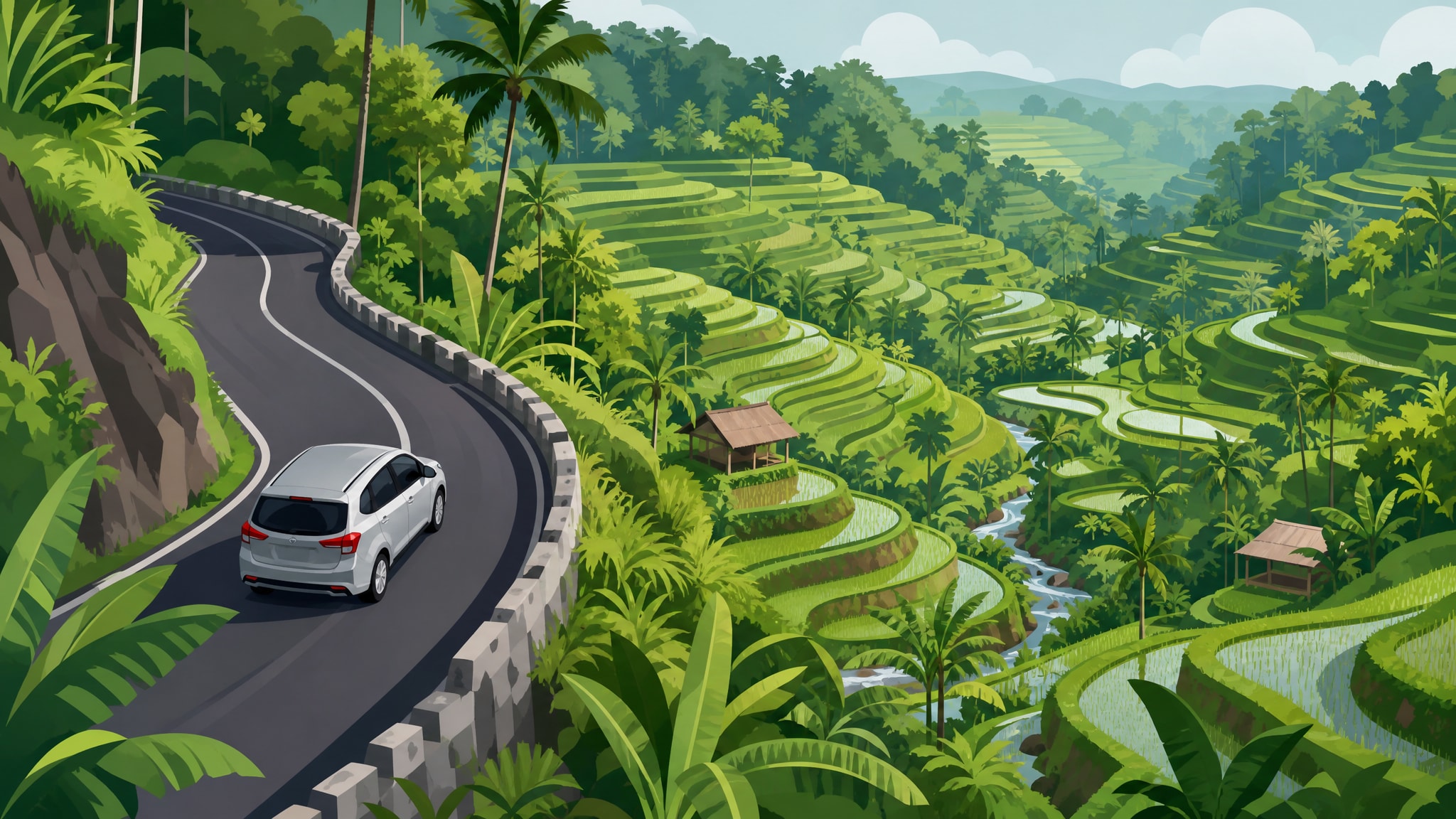
Planning a trip to Tegalalang Rice Terrace takes more than finding the perfect photo spot. The steep roads and tight parking in Bali’s central highlands catch a lot of visitors off guard. We’re a locally owned rental company based in Canggu, and we’ve helped plenty of travelers get through this stretch of road without stress. Whether you go self-drive or bring a driver, knowing the terrain and the timing turns a potentially chaotic outing into an easy day out.
Why Tegalalang Rice Terrace Remains a Bali Essential
The Subak irrigation system at Tegalalang is a UNESCO-recognized cultural landscape dating back centuries, not just a tourist attraction. This cooperative water management system still sustains local agriculture, and it’s what shapes the valley you see in front of you. Visitors who understand that context see the terraces as a working environment, not a backdrop for photos.
Farmers are actively tending crops while tourists walk the pathways, so respecting the site matters. Stay on the marked trails and support the local vendors who maintain access to the land. Do that, and the landscape stays healthy for the next visitor, and you get a more genuine connection to Balinese tradition out of it too.
Driving Routes to Tegalalang Rice Terrace from South Bali
Reaching the terraces from the coast means the roads get narrower the higher you climb. The safest route from Canggu or Seminyak follows the Kerobokan-Ubud bypass, skips the congested center of Ubud town, then turns north onto Jalan Raya Tegalalang. This saves real time over cutting through downtown Ubud, though the final stretch still needs your full attention: sharp bends, limited visibility.
Navigating the Ubud Bypass and Steep Village Roads
The switch from the wide bypass to the village access road can feel abrupt if it’s your first time. Heavy trucks crawl up the inclines, scooters overtake on blind corners, and you’ll want a safe following distance. A polite tap of the horn before curves goes a long way on these shared rural roads.
Road conditions shift fast once you leave the main highway and enter the terrace zone. Potholes, loose gravel and sudden drops in elevation mean slower speeds and constant attention, whatever you’re driving. We tell guests to treat this segment as a technical drive, not a scenic cruise.
Parking Options and Avoiding Traffic Bottlenecks
Parking right at the main viewpoint fills fast and can lead to gridlock during peak hours. Several alternative lots sit further along the ridge with easier entry and exit, though they mean a five-to-ten-minute walk to the main viewing platforms. Picking one of these often saves twenty minutes of idling in traffic and keeps your car away from the stone walls.
Local drivers consistently recommend arriving before 8 AM to avoid congestion on the single-lane access road during peak season. Get there early and you’ll also grab a better parking spot before the tour buses take the convenient ones near the entrance. Arrive after mid-morning, and patience matters as much as your navigation skills, because reversing out of a tight spot on a gradient tests even experienced drivers.
Self-Drive vs Car With Driver for Tegalalang Visits
Whether you take the wheel yourself or hire help comes down to how you feel about the terrain. We’ve written a full comparison of comparing self-drive and driver options if you want to weigh the trade-offs before booking. Each approach has real advantages, depending on whether you want freedom or you want to relax.
When Self-Drive Offers More Freedom
Self-driving lets you linger at lesser-known viewpoints on your own schedule, without a chauffeur waiting on you. You set the pace, which suits photographers and independent explorers who want the quiet corners away from the main flow. That freedom comes with the job of navigating unfamiliar roads yourself, but plenty of travelers find it worth it.
You need to be confident on manual or automatic transmissions on steep gradients before you take this on. Stalling on an uphill start, or misjudging a gap while passing, can turn a good day into a stressful one fast. Be honest with yourself about your driving ability. It keeps our vehicles safe and keeps you safe too.
Benefits of a Local Driver for Highland Roads
Hiring a car with a driver takes the navigation worry off your plate, so you can focus on the green landscape outside the window. Our chauffeurs know exactly where to park, how to pass oncoming trucks, and which roadside stalls serve good refreshments without the tourist markup. They handle the friction of getting there so you can spend your energy enjoying the destination.
This option is worth it for families with young kids, or groups who don’t want to designate one sober navigator for the day. Your driver works as guide and safety buffer both, managing the parking attendants and smoothing the transitions between stops. Peace of mind is worth something when the road ahead looks uncertain.
Best Times to Visit Tegalalang Rice Terrace in 2026
Getting the timing right is the difference between a quiet morning walk and a crowded scramble for space. Light, temperature and visitor numbers all shift through the day and across the seasons. Plan around those rhythms and you get better photos and a more comfortable walk.
Morning Light and Cooler Temperatures
Early risers who arrive before sunrise consistently get the best light and the fewest crowds at Tegalalang. Golden hour lights the palm trees and rice paddies with warm, directional light that softens harsh shadows and brings out the texture in the foliage. Walking the steep paths stays comfortable until roughly 9 AM, and after that the humidity climbs and makes the exertion a lot less pleasant.
Crowds thin out a lot in that early window, since most tour operators schedule their arrivals later in the morning. Arrive early and you get the popular swing spots and cafe terraces to yourself, before the mid-day rush turns them into queues. Leave by late morning too, and you’ll dodge the traffic jam that typically builds on the access road after noon.
Seasonal Differences in Landscape Color
Wet season, November through April, shows the terraces at their most vivid emerald green, thanks to the rain feeding the young rice plants. Dry season, May through October, brings golden harvest tones and brown earth as fields mature or sit fallow between plantings. Neither season beats the other; it’s about which look you’d rather see.
Rain can make the clay paths slippery and muddy any month of the year, so grippy footwear is worth it regardless of season. Cloud cover on wet season mornings sometimes diffuses the light beautifully for photos, though it also raises your odds of getting soaked mid-walk. Check the recent weather before you go, so you know roughly what to expect on arrival.
Combining Tegalalang With Nearby Attractions
Getting the most out of your rental period means grouping nearby sites so you’re not backtracking and burning extra fuel. The highland corridor north of Ubud has several cultural landmarks that pair naturally with a terrace visit. Route it well, and a single-destination trip becomes a proper tour of central Bali’s heritage.
Tirta Empul and Gunung Kawi Temple Stops
Tirta Empul holy spring temple sits just fifteen minutes north of Tegalalang, and it’s a striking spiritual counterpoint to the agricultural scenery. Our guide to visiting Tirta Empul temple covers the purification rituals and dress codes so you’re prepared to take part respectfully. Pair the two sites and you get a balanced half-day itinerary, visual and cultural both.
Gunung Kawi royal tombs lie a little further north, and reward anyone willing to walk down hundreds of steps into a river valley carved with ancient shrines. Fewer tourists make it out here despite the site’s history, so you get quieter contemplation among moss-covered stone monuments. Add it to your day and you get a full day out, with more depth than the terrace alone offers.
Coffee Plantation Tours Along the Route
Several family-run coffee plantations sit along the same road between Tegalalang and Tirta Empul, so they’re an easy add to the itinerary. These stops show traditional processing methods and offer tastings of Luwak coffee and cacao tea in shaded garden settings. They’re a good rest break between the more active parts of the day, and they support local agriculture beyond rice.
These plantation visits usually run thirty to forty-five minutes, short enough to fit into a morning or afternoon without throwing off temple timing. Many offer free tastings with purchases optional, so costs stay flexible if you’re watching your budget. Treat them as a pause between destinations rather than the main event, and your day keeps its momentum.
Choosing the Right Vehicle for Highland Exploration
The vehicle you pick shapes your comfort and how well you handle Tegalalang’s roads. Passenger count, luggage, and how confident your driver feels matter far more here than looks. Match the car to the terrain and you avoid mechanical strain and the parking headaches bigger vehicles run into.
Compact city cars reduce parking difficulty by fitting into tighter roadside spots than SUVs can manage on the steep terrace approaches. Our compact car recommendations list the models we picked for their maneuverability and their power-to-weight ratio on inclines. Solo travelers and couples get agility here without giving up safety or air conditioning.
Families who need more seats should go for a mid-size MPV with an automatic transmission rather than squeeze into something too small. Automatic gearboxes take the clutch fatigue out of repeated hill starts, so the driver can focus on steering and braking. For the broader picture, our general Bali car rental tips cover the insurance and documentation worth sorting out before highland driving.
Larger vehicles just don’t fit the narrowest sections of the terrace access road, whatever your passenger count. Force a minibus or a full-size SUV through a gap built for motorcycles, and you risk bodywork damage and block traffic for everyone behind you. Know this limitation before you book, and you’ll save on repairs and keep goodwill with the locals sharing the road.
Practical Tips for a Hassle-Free Tegalalang Experience
A few small preparations head off the frustrations that most diminish this landscape. Carry small denomination cash for parking fees, for the voluntary donations at trail entrances, and for restrooms that can’t make change. Wear shoes with grip rather than flip-flops. They protect your ankles on the uneven clay paths, which get slick after rain or morning dew.
Staying on the marked pathways protects both the farmers’ property and your own safety near the unmarked irrigation channels. Wander off-trail and you risk damaging growing rice, plus hidden holes and unstable ground hide under the vegetation. A little courtesy toward the workers keeping this landscape running keeps it open for the next visitor too.
Plans change without warning when travel involves weather, health, or a shifting group. We offer WhatsApp-based last-minute bookings and 24-hour road assistance for guests exploring remote highland areas like Tegalalang. Message us and you get real-time support, no international call charges, no language barrier.
A no-obligation quote takes a minute and tells you exactly what your dates and vehicle preference will cost. Whether you need a compact car for solo exploration or a chauffeur-driven MPV for the family, we build the option around your actual itinerary, not a generic package. Message us today for some peace of mind before your highland trip.


