
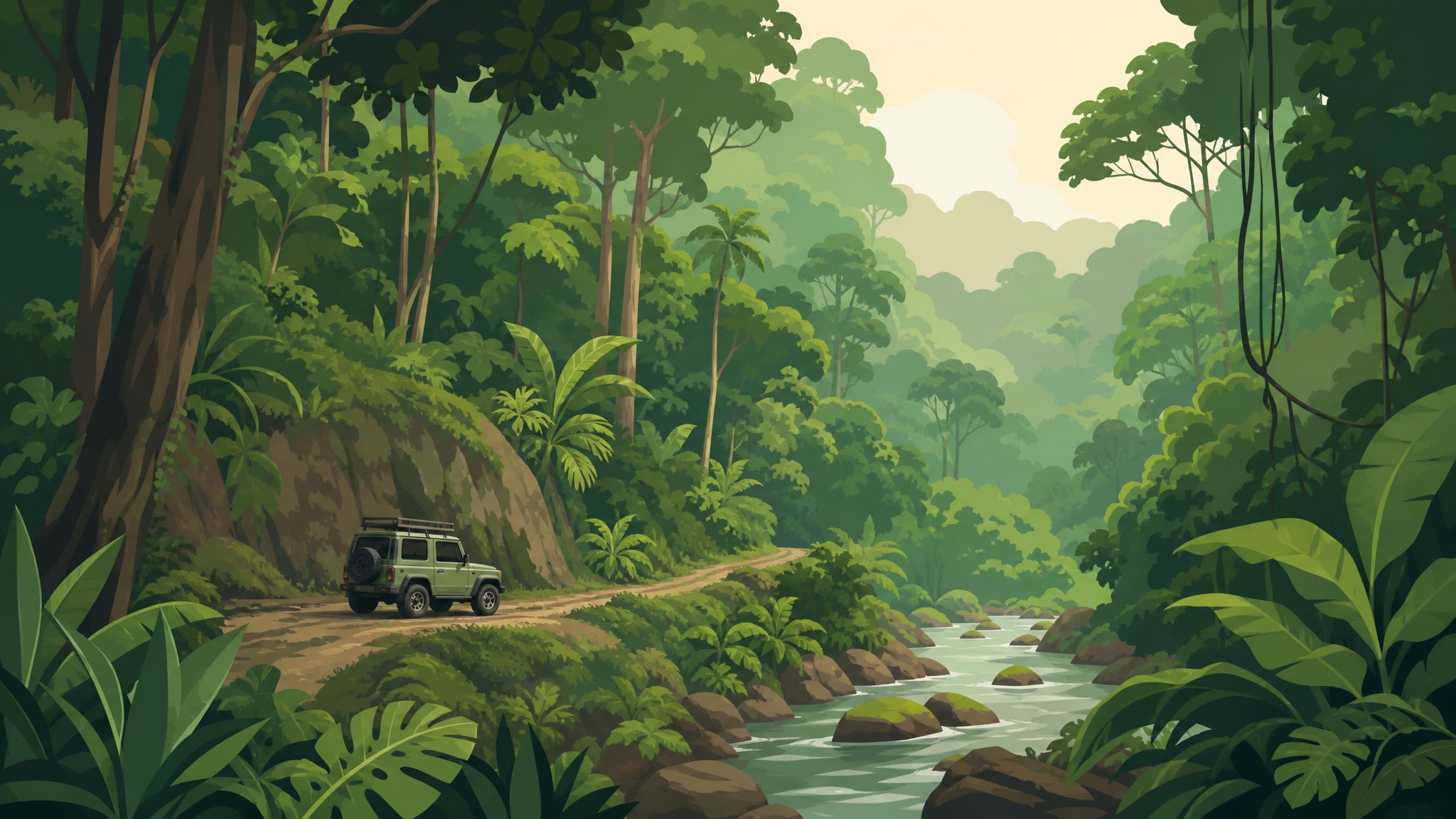
Bali’s interior keeps revealing new corners for travelers who want nature beyond the crowded south, and Kumbuh Jungle has become a focal point for eco-tourism in 2026. It’s a raw, immersive experience, nothing like a manicured beach club or a paved tourist circuit, and that means you need to plan your transport with care. Getting there takes more than a map. It takes a vehicle suited to rural conditions and a feel for local road etiquette.
We put together this guide to help you get there safely and comfortably, whether you’d rather self-drive or let a chauffeur handle it. The point is simple: your visit should be about the jungle, not logistical stress.
What Is Kumbuh Jungle and Why Visit in 2026
Kumbuh Jungle is part of a shift toward regenerative tourism in Bali, where the draw is untouched biodiversity rather than built attractions. In 2026, you’ll find an environment built around conservation and quiet immersion rather than commercial infrastructure, which sets it apart from busier zones like Ubud’s main monkey forest or Canggu’s coastal strips. The area works as a green lung for the island, with dense canopy cover, natural river systems, and birdlife that has largely vanished from more developed parts of Bali.
There are no luxury amenities here, and no paved pathways. That’s the point for travelers who want authenticity over convenience.
Expect uneven terrain, high humidity, and limited mobile signal once you pass the main village perimeter. Preparing mentally for a rugged trip matters as much as packing the right gear. Local operators note that last-minute booking flexibility matters for nature sites, since weather can change plans fast, and that unpredictability is part of what makes Kumbuh Jungle feel genuine right now.
Driving Routes to Kumbuh Jungle from Popular Bali Areas
Reaching this remote spot takes patience and realistic time management. GPS estimates often miss rural traffic patterns and the ceremonial processions that regularly pause traffic on single-lane roads. Travelers heading to emerging jungle destinations often do better with automatic transmissions, which cut down on fatigue over winding rural roads, especially through the elevation changes leading into the Kumbuh basin.
From Canggu and Seminyak
The drive from the southern coast usually takes two to three hours, depending heavily on whether you leave before or after the morning rush-hour bottleneck at Kerobokan. You’ll cross the Denpasar bypass, then head north through Mengwi into the Tabanan regency, where the roads improve but the lanes narrow. A compact car handles the highway stretch fine. Once you hit the village roads, though, stay alert: locals share the asphalt with livestock and pedestrians.
From Ubud and Airport
From Ubud, plan for ninety minutes to two hours on the scenic but demanding route through Payangan and Tegallalang before you drop into the Kumbuh valley. Ngurah Rai International Airport is roughly two and a half hours away via the toll road and northern arterial routes, so an early start beats both the heat and the traffic. The final approach from either direction brings steep gradients and blind corners, which call for slow speeds and a horn tap to warn oncoming motorcycles you’re there.
Parking and Road Safety Near Kumbuh Jungle
Rural Bali runs on informal systems, nothing like an urban parking structure, and knowing the unwritten rules saves you confusion when you arrive. We provide 24-hour road assistance on all our rentals, so you have peace of mind exploring remote areas like Kumbuh Jungle. Still, knowing what to expect before you park saves time and skips unnecessary back-and-forth.
On-Site Parking Availability
There’s no paved lot at the jungle entrance. Local residents manage flat dirt clearings or widened roadside verges instead. Expect to pay a small informal fee, usually ten to twenty thousand rupiah, directly to whoever’s directing traffic that day. It supports village upkeep and holds your spot while you’re out exploring. These spots fill up fast during peak daylight hours, so arrive early if you want a level patch of ground instead of balancing your rental on a slope.
Navigating Narrow Village Roads
The final kilometers are often single-track, boxed in by irrigation ditches, dense vegetation, or low stone walls, with zero margin for error. Yield to uphill traffic and pull into the passing bays when a truck or bus comes the other way. Keep your speed under thirty kilometers an hour through these stretches. Kids, dogs, and chickens cross without warning, and braking hard on loose gravel is how you lose control.
Choosing the Right Rental Car for Kumbuh Jungle
The car you pick decides whether the trip feels like an adventure or a slog, especially once the road conditions get rough near the destination. Plenty of tourists assume any rental will do for exploring Bali, but Kumbuh Jungle specifically rewards higher clearance and a reliable cooling system over fuel economy or looks.
Compact Cars vs SUVs
A compact city car like the Toyota Agya or Daihatsu Sigra is fine for solo travelers or couples sticking to main roads, but these cars struggle with the potholes and steep inclines on the final approach. An SUV or crossover gives you better ground clearance, better suspension over unpaved sections, and stronger air conditioning through the humid climb into the jungle corridor. If you’re traveling as a family, hauling luggage, or in a group of more than four, the extra space and power in a larger vehicle turns a rough transit into a comfortable one.
Self-Drive vs Car With Driver
Self-driving gives you the most freedom: stop for photos or coffee whenever you feel like it, no coordinating with anyone else’s schedule. Hiring a car with driver, on the other hand, takes navigation anxiety and parking hassle off your plate, and it gets you local knowledge about safe stopping points or hidden viewpoints no map will show you. If narrow mountain roads make you nervous, or you’d rather save your energy for the hike, our chauffeur service gets you to the trailhead fresh instead of worn out from hours of concentrating on the road.
Best Times to Visit Kumbuh Jungle for Peace of Mind
Timing your visit right protects both your safety and how much you actually enjoy the trip, since tropical weather decides accessibility far more than any opening hours do. The dry season, April through October, gives you the most reliable driving conditions, with firm soil underfoot and little risk of mudslides blocking the road in. Within those months, weekday visits mean solitude and easier parking, while weekends bring domestic tourists who crowd the limited facilities and bottleneck the narrow approach roads.
Arriving early, between six and eight AM, gets you the best light for photos, cooler temperatures for hiking, and empty roads that make the drive genuinely enjoyable instead of stressful. During the wet season, November through March, afternoon thunderstorms build fast, turning dirt tracks slippery and cutting visibility down to dangerous levels within minutes. Plan to leave before noon and you can exit safely even if the rain arrives, sidestepping the mix of darkness, downpours, and unfamiliar curves that catches unprepared drivers off guard.
Essential Preparation and Local Etiquette
Jungle environments call for respect toward both physical hazards and cultural sensitivities, and skipping either one undercuts your visit no matter how well you’ve planned the logistics. Packing the right gear keeps small discomforts from distracting you from the scenery, and following the local norms keeps you a welcome guest rather than an intrusive one.
What to Pack and Wear
Sturdy closed-toe shoes with grip soles are non-negotiable on muddy trails, where flip-flops invite an injury and bare feet expose you to insects or sharp debris. Lightweight long sleeves and pants keep mosquito bites and scratching vegetation off your skin, and a wide-brimmed hat shields your neck on exposed ridge walks. Carry enough drinking water, insect repellent with DEET, and a waterproof bag for your electronics. Humidity under the canopy runs higher than on the coast, and a sudden shower can soak unprotected gear in minutes.
Respecting Community Guidelines
Kumbuh Jungle sits inside living villages, where daily rituals and farm work come before tourism, so keeping your voice down and dressing modestly is basic courtesy. Always ask before photographing residents, temples, or ceremonies, and if someone says no, accept it. Don’t push for exceptions or offer payment to change their mind. Stay on the marked paths so you don’t damage crops or sacred groves, carry out all your waste, including food scraps, and greet locals with a smile or a nod rather than assuming they speak English or expect resort-style service.
Combining Kumbuh Jungle With Nearby Attractions
Getting the most from your rental means clustering destinations by geography instead of crisscrossing the island, and a few worthwhile stops line up naturally with the Kumbuh route. The Jatiluwih Rice Terraces sit along the same northern corridor, with UNESCO-listed landscapes that pair well with jungle immersion and iconic Balinese rice-field views from the elevated lookouts. Handara Gate and the botanical gardens in Bedugul carry the nature theme further north, making a full-day loop that justifies the drive and shows off Bali’s highland side beyond the usual coastal postcard.
If you’re based in Canggu or Seminyak, pair Kumbuh with Tanah Lot Temple on the way back, timed for sunset, and the inland detour pays off with a dramatic ocean contrast. Coming from Ubud, you might combine the jungle with Tirta Empul Water Temple or Gunung Kawi, weaving spiritual heritage into the ecological side of the trip without much backtracking. Request a no-obligation quote via WhatsApp to talk through itinerary-specific vehicle recommendations. Our team can suggest the right car size and transmission for your exact route and passenger count.


