
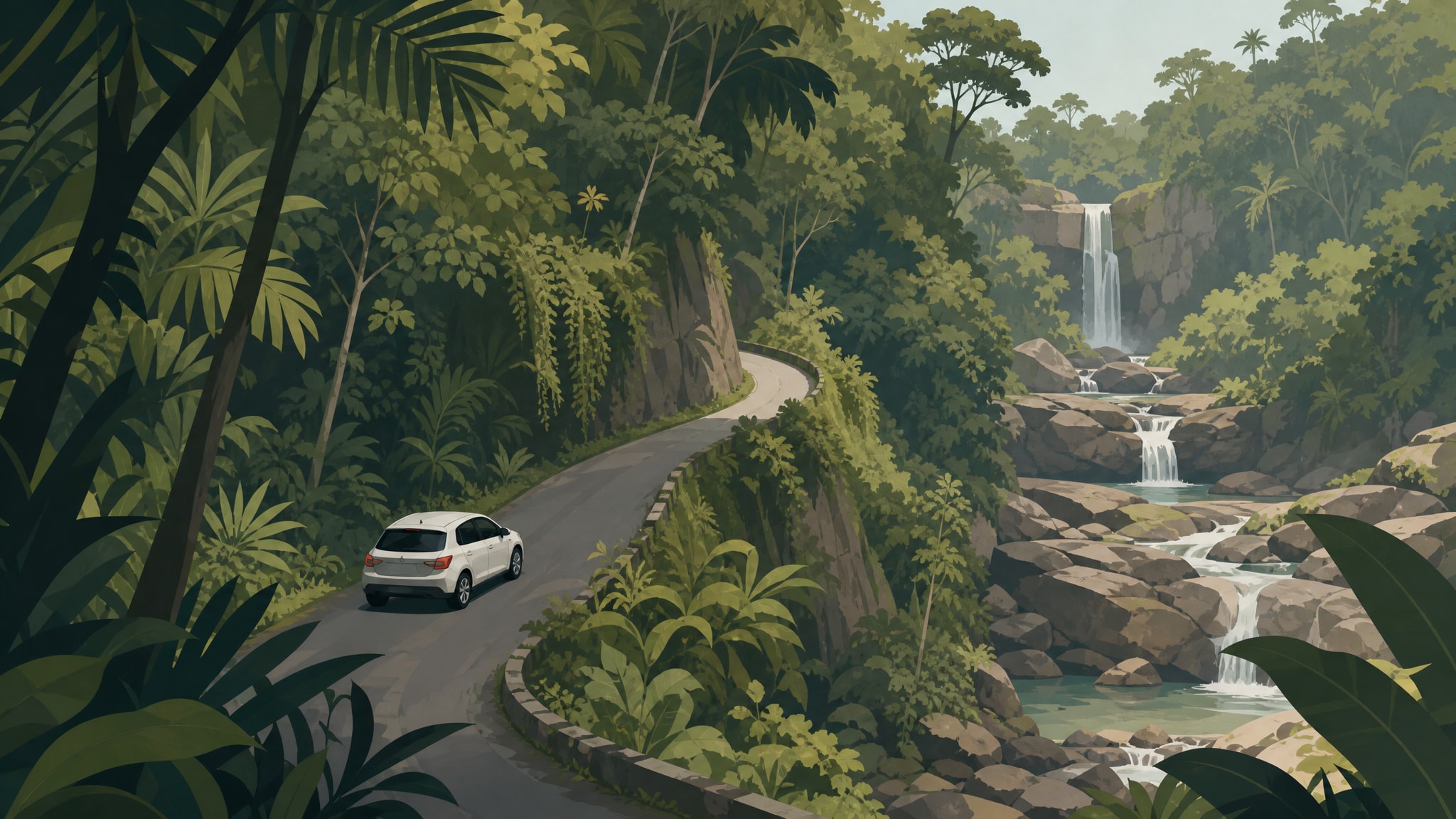
Gembleng Waterfall is a raw, jungle experience that feels worlds apart from the manicured tourist spots of southern Bali. Its natural rock pools and cascading tiers sit deep in Karangasem regency, surrounded by dense forest rather than concrete infrastructure. That remoteness is exactly what makes the place special, but it also means you can’t rely on passing taxis or ride-hailing apps to get there or back. Public transport simply doesn’t service this trailhead, so visiting means bringing your own reliable transport. We want you to enjoy the scenery without worrying about logistics, so we’ve put together these driving and safety notes based on our daily experience renting cars for East Bali trips.
Why Gembleng Waterfall Deserves a Spot on Your Bali Itinerary
Most travelers flock to the same three or four famous waterfalls, leaving Gembleng quiet even during peak season. The site is a series of natural stone basins carved into the riverbed over centuries, creating private swimming spots shielded by towering canopy. There are fewer vendors here, and no paved walkways, which is exactly what preserves the atmosphere many visitors come to Bali seeking.
Reaching this secluded gem takes some planning. Its location in East Bali puts it beyond the range of standard day-trip circuits, and when your destination sits at the end of a rural road with little passing traffic, reliable transport isn’t optional.
Driving Routes to Gembleng Waterfall from South Bali
The journey eastward takes you through changing landscapes as you leave the coastal plains behind. Expect narrow village stretches where larger vehicles can struggle to pass oncoming trucks or parked motorbikes. Local community managers at Gembleng advise arriving before 10am, both to secure parking and to catch the water at its calmest for safer rock pool access. Leaving early also helps you dodge the afternoon traffic that tends to build up on the return route through Gianyar.
Best Roads for Self-Drive Visitors
Take the main Ida Bagus Mantra Bypass toward Karangasem, then turn inland at Klungkung following signs for Sidemen or Selat. This road stays well-paved and wide enough for confident self-drive navigation right up until the final approach. Avoid unmarked shortcuts through the rice terraces unless you’ve verified their condition recently: seasonal rains can wash out unpaved sections overnight. Stick to the established route via Rendang instead, so your suspension deals with predictable surfaces rather than hidden potholes.
Estimated Travel Times from Canggu and Ubud
Traffic patterns in 2026 still make travel times hard to pin down, and a lot depends on your exact departure point and time of day. Expect the drive from Canggu to take between two and a half and three hours. From Ubud it’s usually ninety minutes to two hours, depending on market-day congestion. Those estimates assume dry weather and no ceremonial processions blocking the road, both of which can add real delays. Build in buffer time. Rushing downhill roads to make up lost time just isn’t worth the risk.
Choosing the Right Vehicle for the Journey
Your vehicle choice directly shapes how stressful the final descent feels. The last 2km access road to Gembleng has sharp switchbacks and uneven pavement, and this is where compact cars with good suspension beat wider vehicles every time. Ground clearance still matters for the occasional rough patch, but extra width becomes a liability on single-lane sections bordered by steep drops. What you need is maneuverability and durability, not size or luxury.
Compact Cars vs SUVs for Narrow Access Roads
A small automatic hatchback often gets round the tightest turns more easily than a full-size SUV built for highway comfort. Our automatic transmission rentals give you enough power for climbing back out while keeping the wheelbase short enough for hairpin bends. Families needing more space are better off with a mid-size MPV than a wide off-roader, so you keep some passage margin on the tight sections. Check your mirrors against the roadside vegetation before committing to a path that leaves zero room for error.
When to Consider Hiring a Driver Instead
Unfamiliar mountain roads and foreign traffic conditions stress some drivers no matter how experienced they are back home. Our guide on comparing self-drive and driver options breaks down the trade-offs between independence and peace of mind for hesitant travelers. A local chauffeur knows which blind corners need a honk and where to pull over for an oncoming bus. Hand over the wheel and you get to watch the landscape instead of tracking clutch tension and brake points.
Parking, Entry Fees, and On-Site Logistics
Arrival logistics here look nothing like a commercialized attraction with ticket booths and paved lots. Community-managed areas run on trust and informal contributions rather than corporate pricing. Knowing what to expect avoids awkward moments and keeps things friendly with the residents who maintain access to their land.
Where to Park Safely Near the Trailhead
Designated parking sits next to the trailhead, under shelter provided by local families. Position your vehicle facing outward if you can, to make departure easier on the steep incline. Never block the narrow access lane, even briefly, since farm equipment and resident motorbikes use it throughout the day. Lock your doors and keep valuables out of sight, even though the area has a generally safe reputation.
Current Ticket Prices and Local Guide Expectations
There are no mandatory guide fees or fixed entry tickets at the waterfall itself. Visitors typically leave a voluntary donation of twenty to fifty thousand rupiah per person to support path maintenance and waste management. Guides are available if you want help navigating the slippery riverbed, but hiring one is entirely optional. Bring small notes, since change can be limited at remote community posts.
Safety Essentials for Swimming and Hiking
Natural environments carry risks that managed parks engineer away. Gembleng doesn’t have that safety net, so it pays to know the hazards.
Flash flood incidents in Bali’s eastern gorges historically peak between November and March, which makes a dry-season visit significantly safer for swimming.
Water Level Risks During Wet Season
Avoid entering the gorge during or right after heavy rainfall upstream. Water levels can rise several meters within minutes when rain hits the volcanic slopes above, trapping swimmers below with little warning. Check weather forecasts specifically for the Karangasem highlands rather than going by conditions at your hotel in the south. If the current looks murky or is carrying debris, stay on the bank, no matter how inviting the pools look.
Footwear and Gear Recommendations
Wear water shoes with grip soles: algae-covered rocks cause a lot of ankle injuries among barefoot visitors. Pack waterproof bags for phones and wallets, because splash zones reach further than they look from above. Mobile signal is limited at the site, so let someone know your plans before you head down. For more terrain-specific prep, our Kantolampo Waterfall driving guide covers similar adventure logistics.
Combining Gembleng with Nearby Karangasem Attractions
Making the long drive worthwhile usually means stringing together a few stops in the same regency. Tirta Gangga Water Palace sits just twenty minutes north and gives you a cultural contrast to the natural setting. Lempuyang Temple lies further east along the same corridor, so you can hit three distinct sites without backtracking.
These attractions share similar road conditions, so the driving skills you pick up reaching Gembleng carry straight over to the rest of your itinerary. Fuel stations get scarce once you pass Klungkung, so fill your tank before heading inland. Grouping destinations by geography also gives you the flexibility to skip a stop if the weather or your energy shifts during the day.
Booking a Hassle-Free Rental for Your Waterfall Trip
Spontaneous decisions make the best travel days, and transport should never get in the way of that. You can book a rental car the same day for this trip through our WhatsApp reservation system. We confirm availability and pricing right away, no advance deposit or lengthy email chain required. That suits travelers who only decide on an East Bali day out after checking the morning weather.
We provide 24-hour roadside assistance covering remote regencies including Karangasem, so you’re covered if mechanical issues come up en route to the waterfall. Every rental includes insurance, and it’s valid for the kind of rural driving conditions you’ll find on routes like the Gembleng access road. Request a no-obligation quote today via WhatsApp and we’ll match you with a vehicle suited to this terrain. Our team can also arrange same-day rental bookings for those reading this guide while already in Bali.


